2026-09-20 · Robert Ellis
How To Spot Early Attic Mold Before It Spreads Into Living Spaces
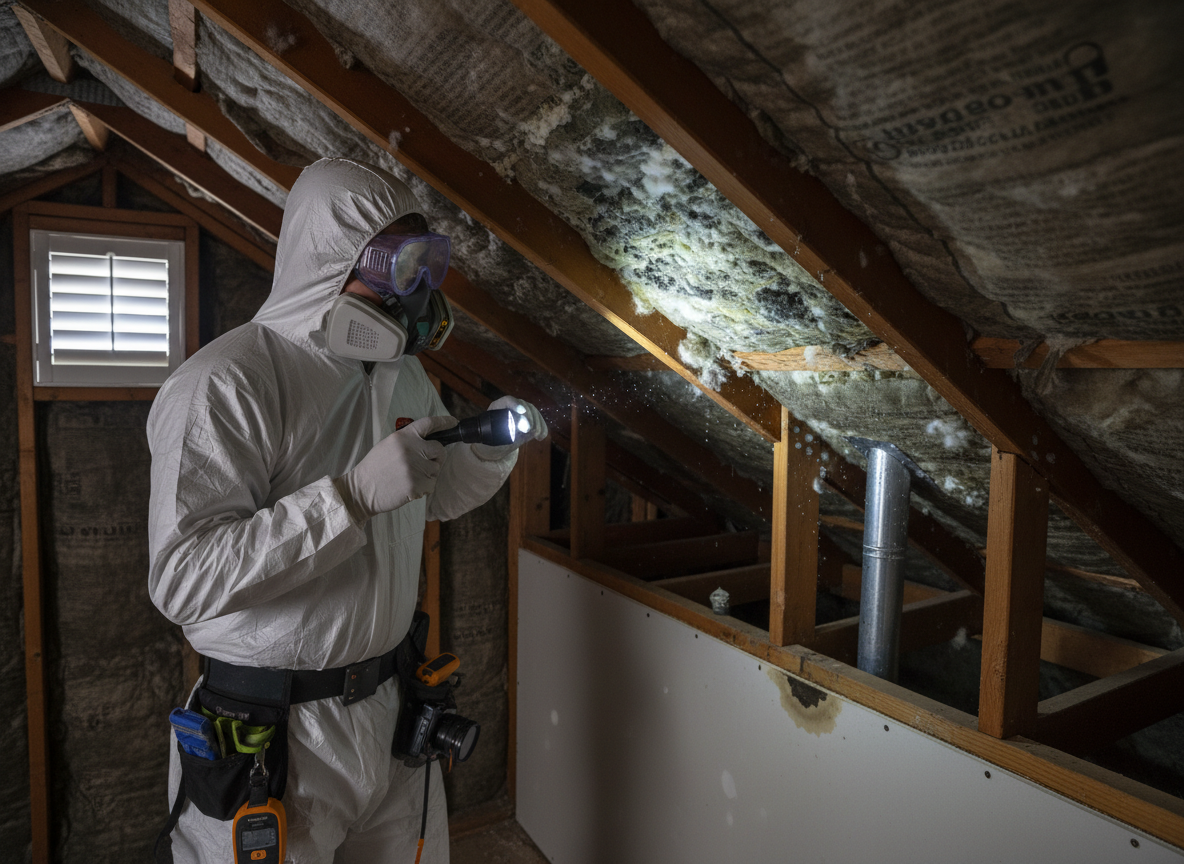
In Palm Coast attics, early mold often shows as small black or green spots on roof sheathing or rafters within weeks of humidity spikes above 60 percent, well before any musty odor drifts into living spaces below.
Inspecting for Discoloration on Wood and Insulation
Homeowners in neighborhoods such as Palm Harbor and Indian Trails should climb into the attic during daylight with a strong flashlight and look along the underside of the roof deck for fuzzy or powdery growth. These spots frequently start near ridge vents or where bathroom exhaust fans terminate. In homes built before 2000, which make up much of Matanzas Woods, the cellulose insulation may show dark staining along the top surface where moisture collects. Checking every 3 to 4 months during the hottest months catches growth before it covers more than a few square feet. If discoloration appears on more than 10 percent of visible sheathing, professional evaluation is warranted to prevent spread through ceiling penetrations.
Checking for Condensation and Water Stains After Humid Summers
Flagler County's humid subtropical climate produces frequent dew points above 70 degrees from June through September, causing moisture to form on cooler roof sheathing overnight. After periods of heavy rain or when Flagler Beach sea breezes push inland, examine rafters for water streaks or rusty nail heads. Homes near Washington Oaks Gardens State Park often sit under tree cover that reduces airflow, increasing condensation risk on north-facing slopes. Look for droplets on HVAC ducts or along the attic floor joists nearest exterior walls. These signs typically appear 8 to 12 weeks after sustained high humidity and indicate the need to trace moisture back to its source before mold colonies expand.
Monitoring Musty Odors Near Attic Access Points
A faint earthy smell near the attic hatch or pull-down stairs often signals hidden growth before visible mold reaches drywall ceilings. Residents in Indian Trails report noticing this odor strongest on humid evenings when indoor air rises and carries spores downward. Compare the smell inside the attic versus the second-floor hallway; if it intensifies upstairs, growth is likely active. Opening the access panel on a cool morning after a warm, rainy week can release a stronger scent if mold is present. Document any odor changes with dates to correlate with weather patterns common between Daytona Beach and St. Augustine.
Common Entry Points in Flagler County Homes
Poor ventilation in older Palm Coast roofs allows moisture from daily showers to remain trapped, especially when exhaust fans vent directly into the attic rather than outside. Attic Mold From Poor Ventilation and Condensation explains how these setups accelerate growth in single-story homes common in Matanzas Woods. HVAC condensation lines that leak onto ductwork create another frequent starting point. After checking visible surfaces, trace any stains back to roof penetrations or bathroom fan ducts. Early detection here keeps remediation limited to small sections instead of full attic cleaning.
Preventing Spread to Living Spaces
Once spots exceed a few inches across, spores can travel through recessed lights, ceiling fans, and attic hatch gaps into bedrooms below. Seal these openings with foam gaskets rated for attic use and add insulation dams around them. Homeowners in Palm Harbor who add powered attic ventilators sized for their square footage often see reduced moisture levels within one season. Regular checks every 60 to 90 days during summer, combined with prompt attention to any new stains, stops growth before it affects indoor air quality. For guidance on humidity-driven mold patterns specific to the region, see Why Palm Coast Attics Grow Mold After Summer Humidity Spikes.