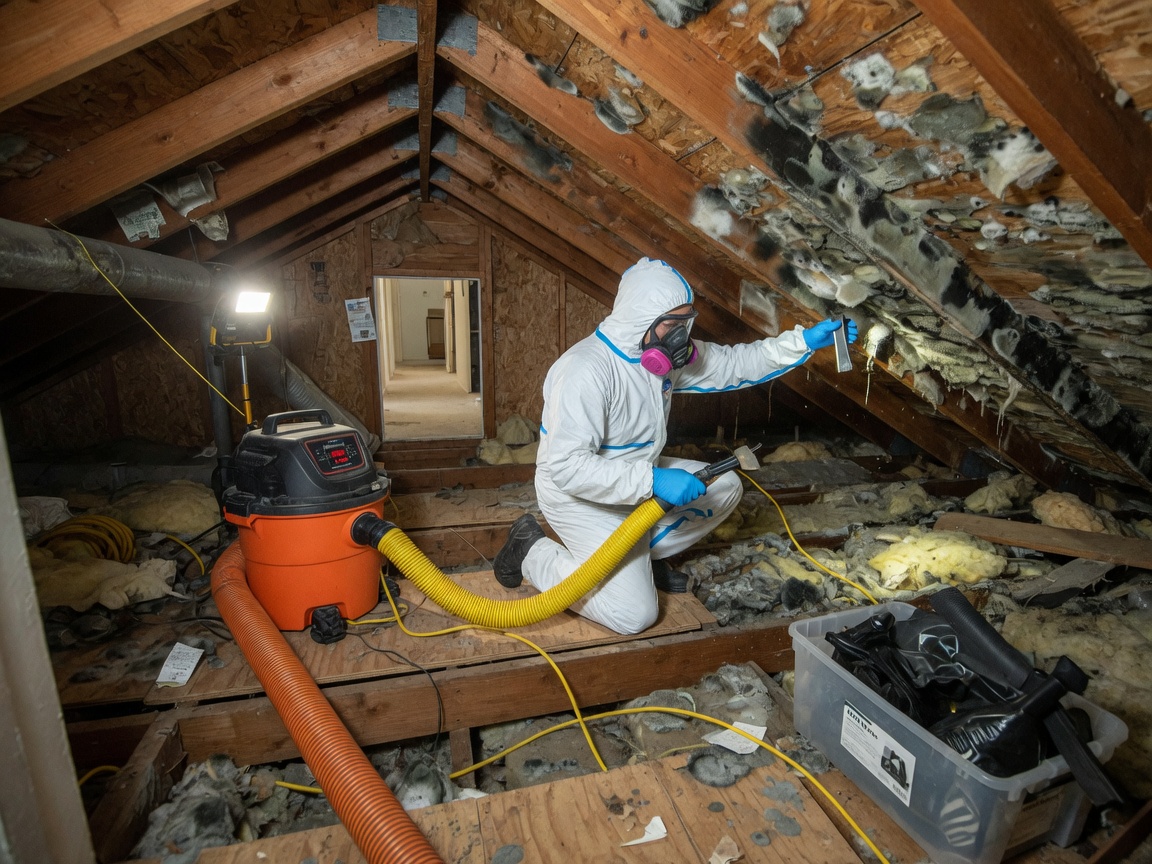
In Palm Coast homes built from the 1980s onward, especially in neighborhoods like Matanzas Woods and Indian Trails, attic mold often forms when ridge vents and soffit intake are undersized or blocked by insulation. The humid subtropical conditions bring heavy summer moisture that condenses on cooler roof decking during mild winter nights, feeding black mold on plywood and rafters. Technicians map moisture with infrared before any removal because cutting into drywall without locating the dew point source leads to rapid regrowth.
Flagler County building practices frequently left attics with only passive gable vents that fail once homeowners add blown-in cellulose for energy savings. Condensation then pools along the north-facing slopes common in Palm Coast subdivisions near Flagler Beach. Remediation requires removing affected insulation, treating rafters with EPA-registered antimicrobials, and restoring airflow without violating the 1/150 ventilation ratio required by local code. Homes closer to Washington Oaks Gardens State Park see faster mold cycles due to higher overnight humidity from the Intracoastal.
Edge cases appear in Palm Harbor where vaulted ceilings reduce attic volume and trap warm air against the sheathing. Standard fogging treatments miss these pockets, so crews use negative-air machines with HEPA filtration during removal. Post-treatment, new baffles and powered attic fans are often added to maintain negative pressure relative to living spaces, preventing moisture migration from bathrooms and laundry rooms below.
Technician insight
In Palm Coast the thing that catches most people out with Attic Mold From Poor Ventilation and Condensation is the north-facing roof slopes in 1990s homes around Indian Trails. Those decks stay cooler overnight while the rest of the attic heats up, creating a hidden dew line that standard gable vents never reach.
Matanzas Woods Condensation Growth
Homeowner noticed musty smell after a week of rain. Inspection found condensation lines along the north rafters where insulation had been pushed against the deck. Crew removed wet cellulose, treated the plywood, added ridge vents, and restored airflow so moisture no longer collected.
Attic Mold From Poor Ventilation and Condensation Services We Offer
✓Condensation Source Mapping
Infrared and moisture meter inspection identifies dew-point locations on roof decking before any mold work begins in Palm Coast attics.
✓Ridge and Soffit Vent Upgrades
Installation or enlargement of ridge vents and intake soffits to meet code airflow requirements and reduce future condensation in Flagler County homes.
✓Mold-Contaminated Insulation Removal
Safe extraction of cellulose or fiberglass insulation showing growth, followed by HEPA vacuuming of rafters and joists in neighborhoods like Indian Trails.
✓Antimicrobial Treatment of Rafters
Application of registered antimicrobials to structural wood after mold removal to inhibit regrowth caused by ongoing humidity in Palm Coast attics.
✓Powered Attic Fan Installation
Addition of thermostatically controlled exhaust fans to pull moist air out during summer months common in Matanzas Woods and near Daytona Beach.
Attic Mold From Poor Ventilation and Condensation Cost in Palm Coast, FL
| Service | Typical Range | What Affects It |
|---|---|---|
| Condensation mapping and report | $250–$450 | Larger attics in Matanzas Woods increase time required. |
| Insulation removal and disposal | $600–$1,400 | Depth and type of insulation plus access difficulty in vaulted Palm Coast homes. |
| Rafter treatment and drying | $400–$900 | Extent of growth and number of days needed for dehumidification. |
| Ridge vent upgrade | $350–$750 | Length of ridge and whether new baffles are required. |
Ranges are typical for Palm Coast, FL and confirmed with an exact written quote before any work starts.
How it works
- 1
Initial Moisture Assessment
Technicians inspect the attic from 152 City Pl base, checking ventilation ratios and using meters to locate condensation zones in Palm Coast homes.
- 2
Containment And Removal
Negative air machines isolate the space while affected insulation and mold are removed without disturbing living areas below.
- 3
Wood Treatment And Drying
Rafters receive antimicrobial application and dehumidification until moisture readings drop below 12 percent.
- 4
Ventilation Restoration
New or enlarged vents are installed and tested to restore proper airflow before insulation replacement.
Pricing
Pricing based on square footage inspected and materials removed; quotes provided after on-site assessment.